Introduction
Many people want a straight, healthy smile. Orthodontic treatment helps fix crooked teeth and bite problems. Today, you can choose between braces and aligners. In this blog, we compare braces vs aligners. We will help you understand your orthodontic options. This guide will make it easier to decide which is better: braces or aligners.
What Are Braces?
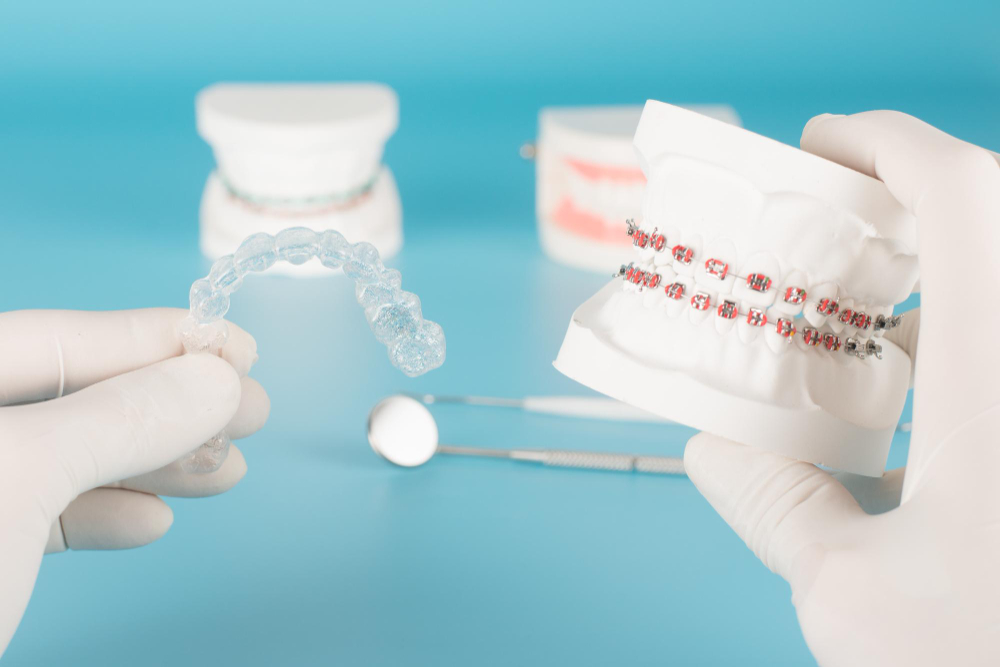
Braces are devices that straighten teeth. They use brackets, wires, and bands to move teeth slowly. There are several types of braces:
Braces work by applying gentle pressure. Over time, this moves teeth into the right position. Your dentist or orthodontist adjusts them every few weeks.
What Are Aligners?
Aligners are clear, plastic trays that fit over your teeth. They are also called clear aligners. Invisalign is a popular brand. Aligners are custom-made for each person. You wear a set of trays for about two weeks. Then, you switch to the next set. Each tray moves your teeth a little more.
There are two main types of aligners:
Aligners are removable. You take them out to eat, drink, and brush your teeth.
Key Differences: Braces vs Aligners
When choosing between braces and aligners, consider these factors:
Pros and Cons
Braces
Aligners
Who Should Choose Braces or Aligners?
Choosing between braces vs aligners depends on your needs. For example, braces are better for complex cases. Children and teens often use braces. Aligners work well for adults and teens with mild to moderate problems. If you want a less visible option, aligners may suit you. However, you must wear them as directed. Your dentist can help you decide.
Lifestyle Considerations
Both options affect your daily life. With braces, you must avoid sticky or hard foods. Cleaning your teeth takes more time. Aligners let you eat what you like, but you must remove them first. You also need to brush after every meal before putting them back in. In social situations, aligners are less noticeable. But, you must remember to wear them most of the day.
Safety and Effectiveness
According to the World Health Organization and dental journals, both braces and aligners are safe when used correctly. Studies show both options can straighten teeth well. However, braces may work better for severe cases. Aligners are best for mild to moderate problems. The CDC also notes that good oral hygiene is important with any orthodontic treatment.
Conclusion
In summary, both braces and aligners can help you get a healthy smile. Braces are strong and work for all cases. Aligners are clear, removable, and best for mild to moderate needs. Think about your lifestyle, comfort, and budget. Talk to your dental specialist to find the best orthodontic option for you.
Call-to-Action
For the best results, consult a dental specialist for personalized orthodontic recommendations. They can help you choose between braces vs aligners based on your needs.